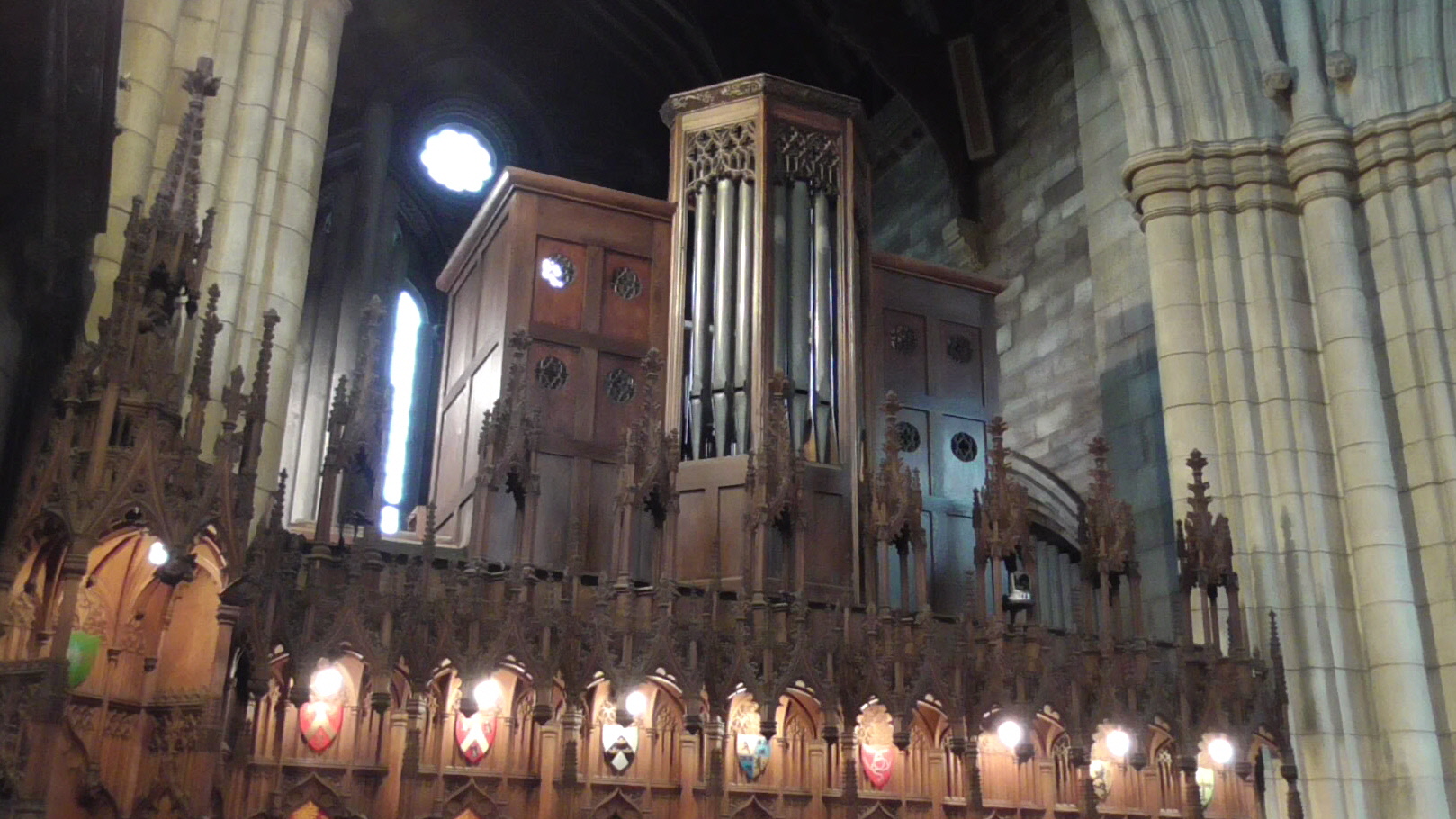
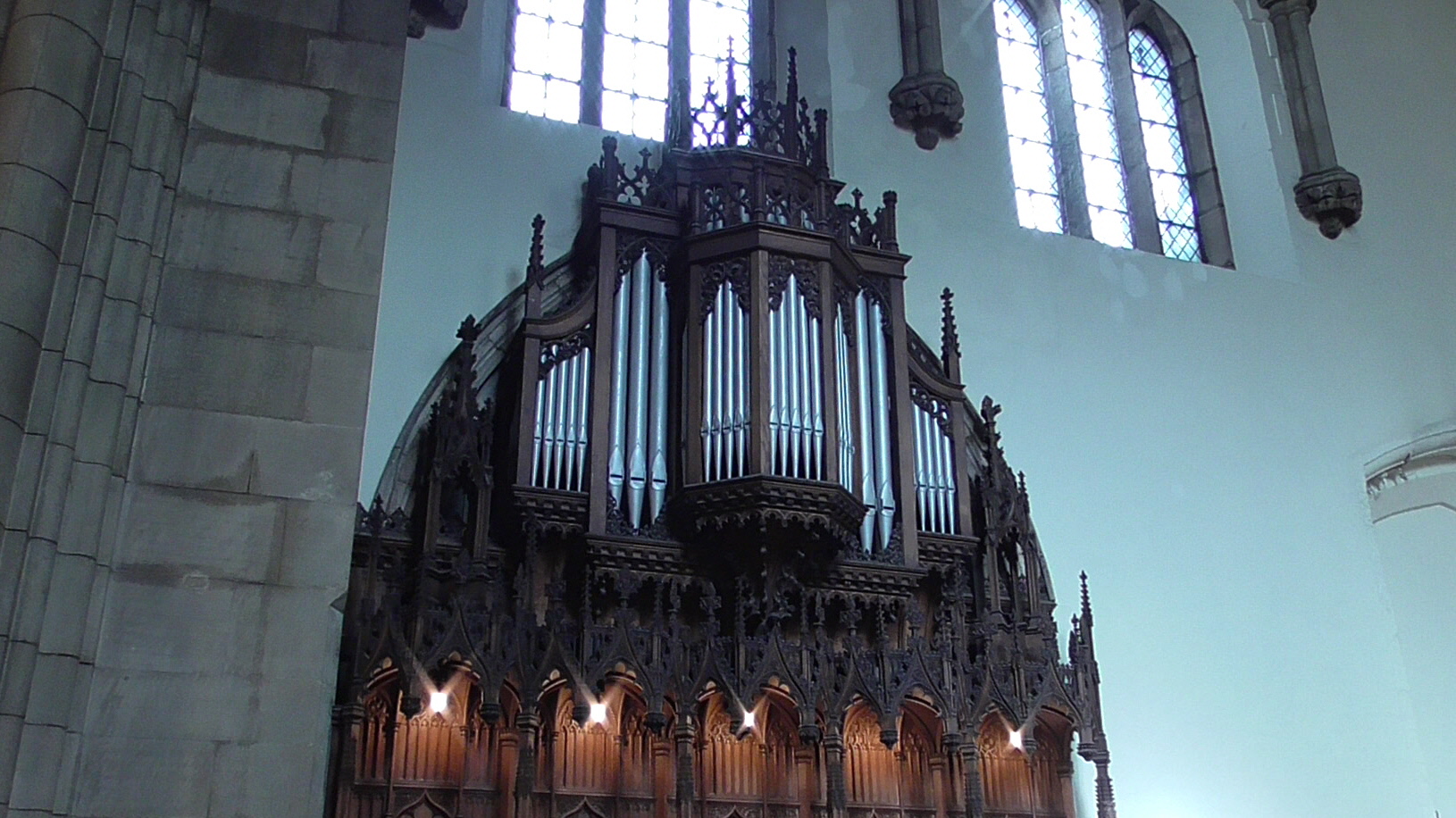
The first reference of an organ in the Cathedral comes in the poem by Gruffudd Gryg, who witnessed the arrival of a new instrument sometime between 1350 and 1370, and records how all the parishioners contributed towards it.
During the commonwealth (1649 - 60) the organ was either removed or destroyed in accordance with the Parliamentary Order 'for the speedy demolition of all organs, images and all matters of superstitious monuments in all cathedralsthroughout the kingdom of England and the dominion of Wales.'
When Charles II was restored to the throne in 1660 a new organ was installed being paid for from a legacy of £100 left by Bishop William Roberts and erected by his successor, Robert Morgan. On the organ case was a Latin verse in which the two bishops, who had provided the money and erected the organ, were compared to David and Solomon respectively.
In 1779 the organ was replaced by a new instrument. It cost 360 guineas and was made by Samuel Green, the leading organ builder of his day. This was in constant use until it was replaced by the present organ which was built by William Hill & Son in 1873.
In 1929 electric action was installed by Hill, Norman & Beard but very little alterations made to the specification.
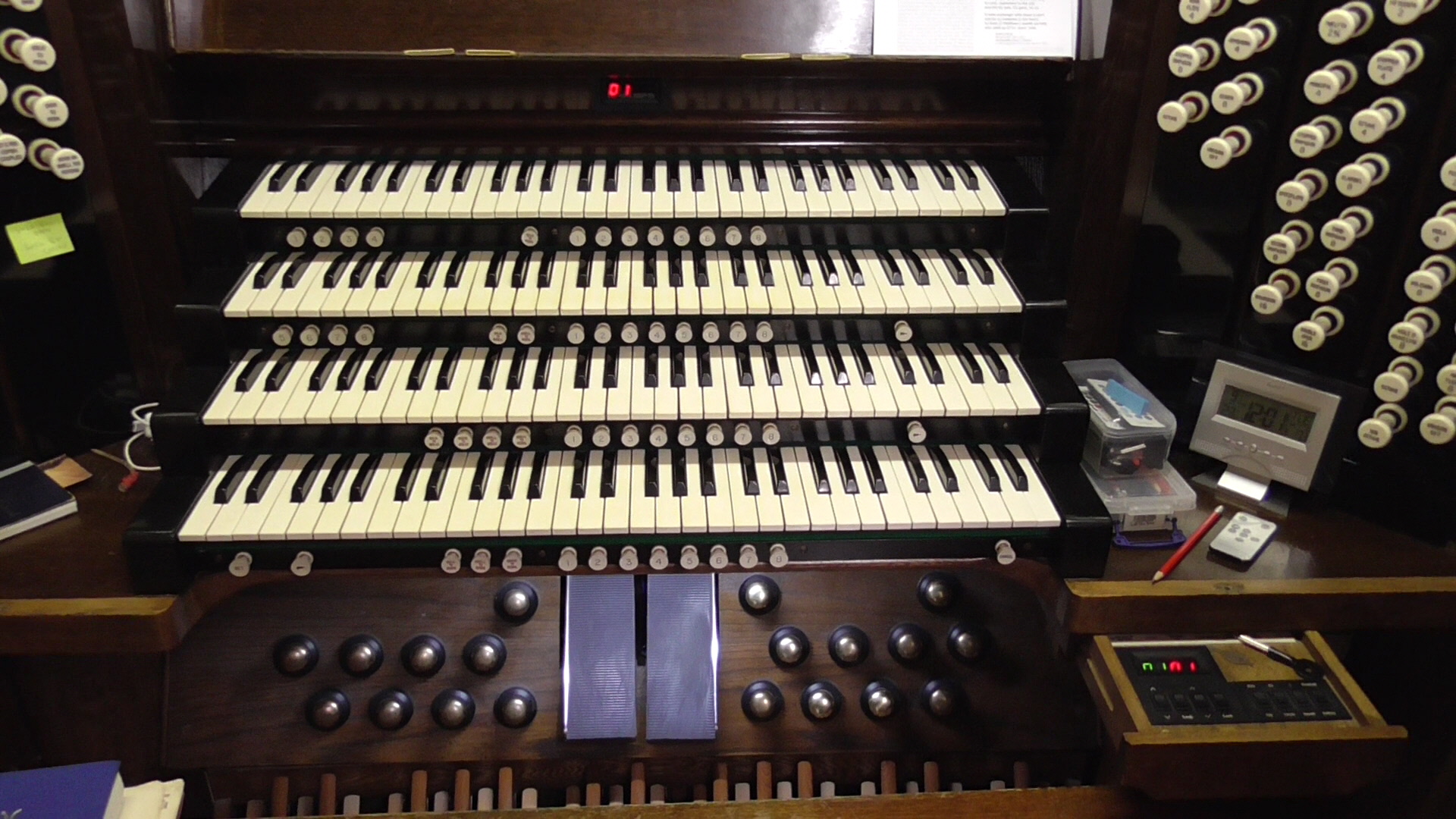
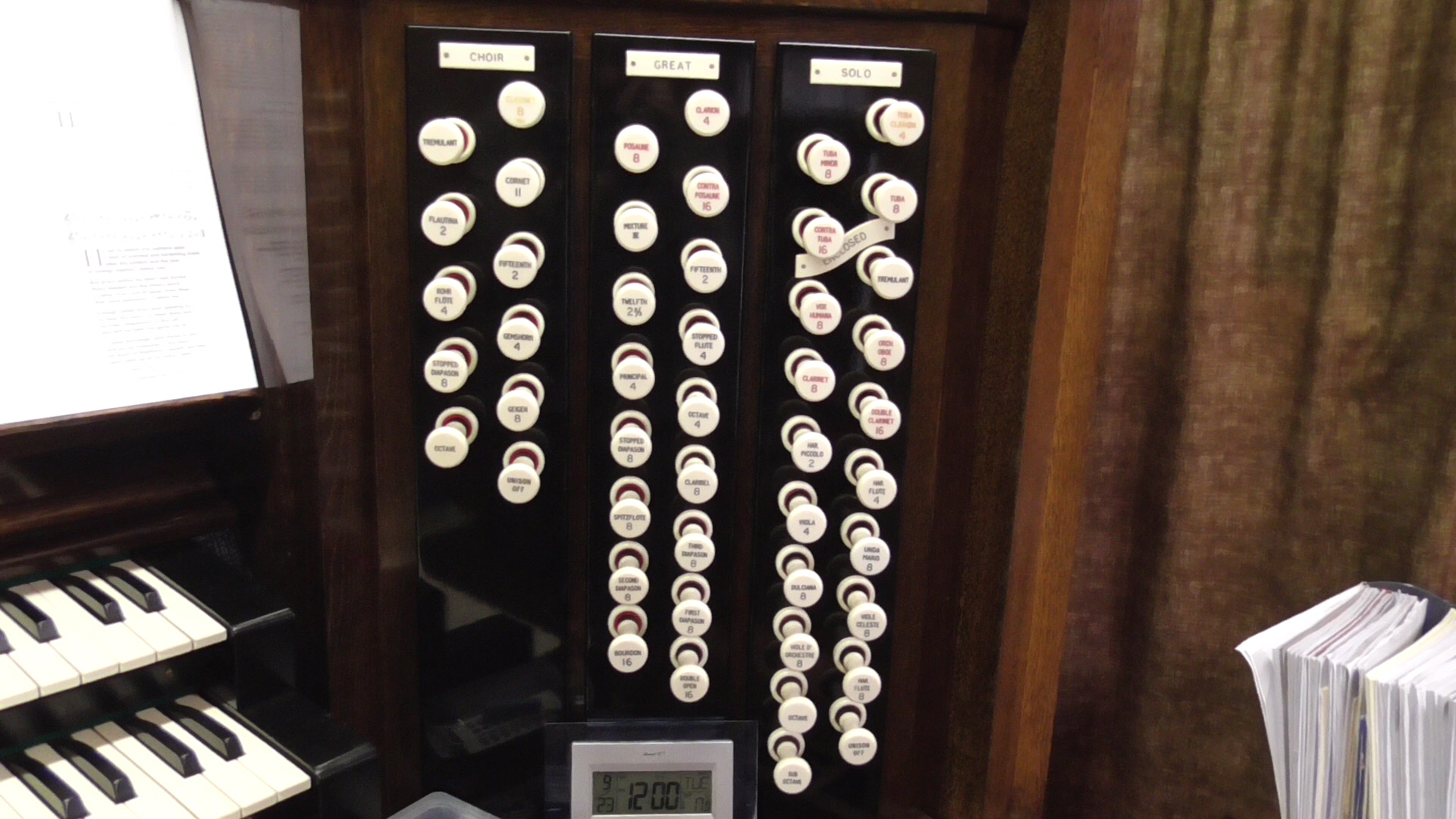
The organ had a major rebuild in 1954 by Compton which included the installation of new electric action and the present detached drawstop console.
Between 2006 and 2008, David Wells Organ Builders Ltd of Liverpool rebuilt the organ. The solo soundboard is now located in the Crossing Arch into the North Transept, and is the un-enclosed Choir Organ. The choir soundboard in the organ chamber has become the solo soundboard, and has been turned round to face through the Transept Arch. It has been raised high to facilitate toilet and kitchen facilities on the ground floor. A new vestry has been built on the first floor for servers. The console is placed in the North Transept.
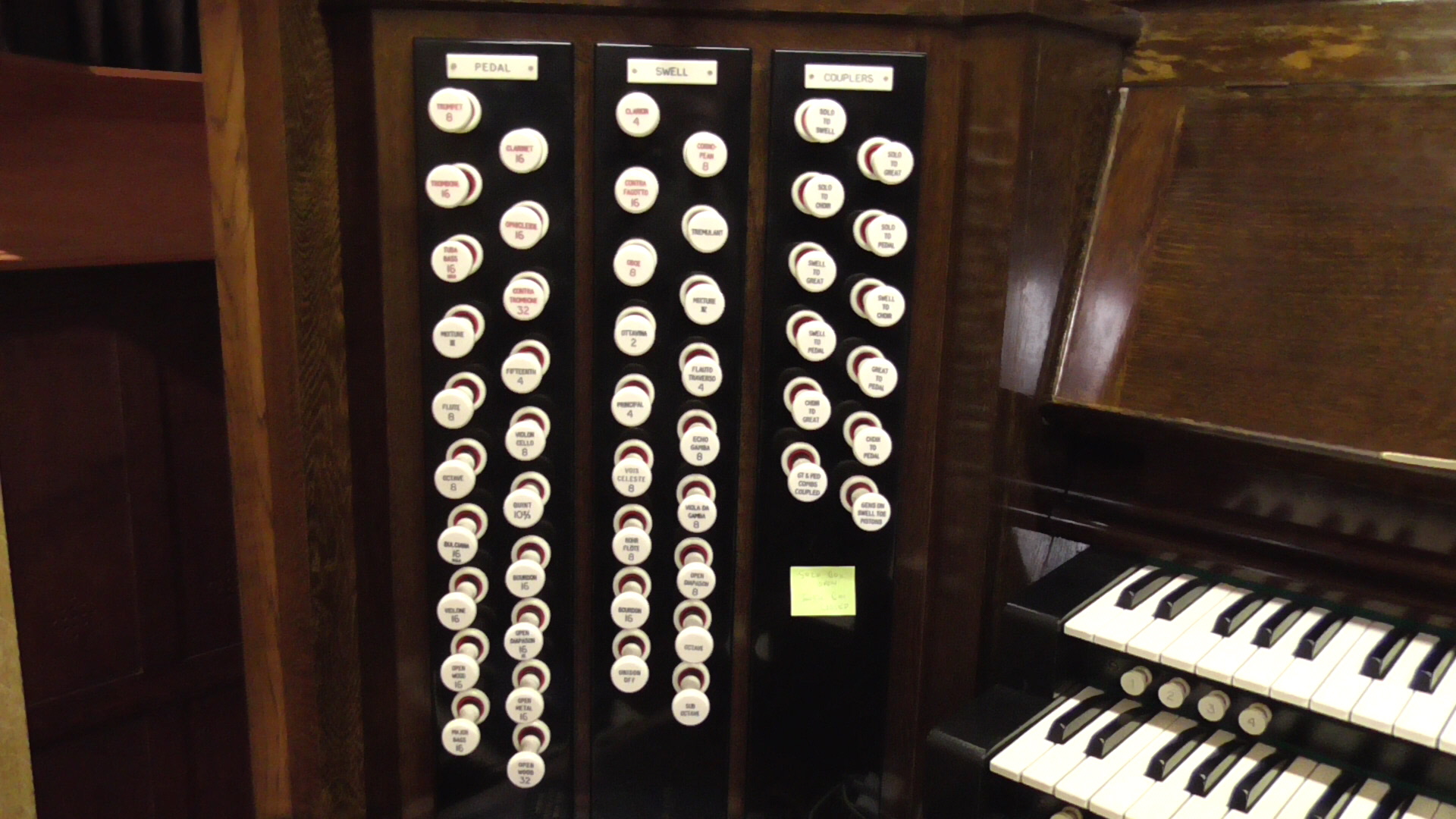
The specification reads:
PEDAL
Open Wood 32'
Major Bass 16'
Open Wood 16'
Open Metal 16'
Open Diapason 16'
Violone 16'
Bourdon 16'
Dulciana 16'
Quint 10 2/3'
Octave 8'
Violoncello 8'
Flute 8'
Fifteenth 4'
Mixture IV
Contra Trombone 32'
Ophicleide 16'
Trombone 16'
Tuba Bass 16' (from solo)
Clarinet 16'
Trumpet 8'
CHOIR
Geigen 8'
Stopped Diapason 8'
Gemshorn 4'
Rohr Flöte 4'
Fifteenth 2'
Flautina 2'
Cornet II
Clarinet 8' (from solo)
Unison Off
Octave
Tremulant
GREAT
Double Open 16'
Bourdon 16'
First Diapason 8'
Second Diapason 8'
Third Diapason 8'
Stopped Diapason 8'
Claribel 8'
Spitzflöte 8'
Octave 4'
Principal 4'
Stopped Flute 4'
Twelfth 2 2/3'
Fifteenth 2'
Mixture IV
Contra Posaune 16'
Posaune 8'
Clarion 4'
SWELL
Bourdon 16'
Open Diapason 8'
Rohr Flöte 8'
Viola da Gamba 8'
Echo Gamba 8'
Voix Céleste 8'
Principal 4'
Flauto Traverso 4'
Ottavina 2'
Mixture IV
Contra Fagotto 16'
Cornopean 8'
Oboe 8'
Clarion 4'
Sub Octave
Unison Off
Octave
Tremulant
SOLO
Harmonic Flute 8'
Viole d'Orchestre 8'
Viole Céleste 8'
Dulciana 8'
Unda Maris 8'
Harmonic Flute 4'
Viola 4'
Harmonic Piccolo 2'
Double Clarinet 16'
Clarinet 8'
Orchestral Oboe 8'
Vox Humana 8'
Tremulant
Contra Tuba 16' (unenclosed)
Tuba 8' (unenclosed)
Tuba Minor 8' (unenclosed)
Clarion 4' (unenclosed)
Sub Octave
Unison Off
Octave
COUPLERS
Swell to Pedal
Swell to Great
Swell to Choir
Choir to Great
Choir to Pedal
Great to Pedal
Solo to Pedal
Solo to Great
Solo to Choir
Solo to Swell
Great and Pedal combinations coupled
Generals on Swell toe pistons
ACCESSORIES
8 thumb pistons to choir
8 thumb pistons to great
8 thumb pistons to swell duplicated by toe pistons
8 thumb pistons to solo
8 toe pistons to pedal
8 general thumb pistons
10 reversible thumb pistons
3 reversible toe pistons
1 setter thumb piston
1 general cancel thumb piston
1 balanced expression pedal - swell
1 balanced expression pedal - solo