The following info is snippets I have taken from a history booklet compiled by organist Peter Morris:
It is believed that the first organ to be installed here was in 1810 by the firm George Pike England. This was replaced in 1861 by a new instrument built by William Hill & Sons. There may have been alterations to this instrument during major restoration work on the church in 1883. In 1899 it is thought that the organ was sold to the firm Norman & Beard for £345 and installed at St Paul's Church in Luton. Norman & Beard provided a new 3 manual instrument to St Michael's and rebuilt by them in 1920 for the sum of £1050.
On 2nd February 1950 the church was gutted by a fire and only the tower with it's peel of 8 bells and porch survived. A temporary church was set up and in 1951 an anonymous gift of a Compton electrone model 347 was received. It is believed that this organ was reinstalled at Christ the King in nearby Aldersley once the church had been rebuilt.
Rebuilding took 5 years and the church was consecrated on April 16th 1955. Various options were looked at in the form of a new organ. The first venture was to buy the Bishop organ which was being sold by the Birmingham Royal Institute for the Blind for £1050 but it was found that this organ would not fit in the space provided. The architect agreed to make alterations but the this option was dropped and quotations were obtained from a variety of firms including Willis at £7925, Rushworth & Dreaper at £8250 (this included using some of the previously mentioned Birmingham instrument) and Compton at £6750 so they got given the job and the new organ was installed and dedicated on 13th December 1956.
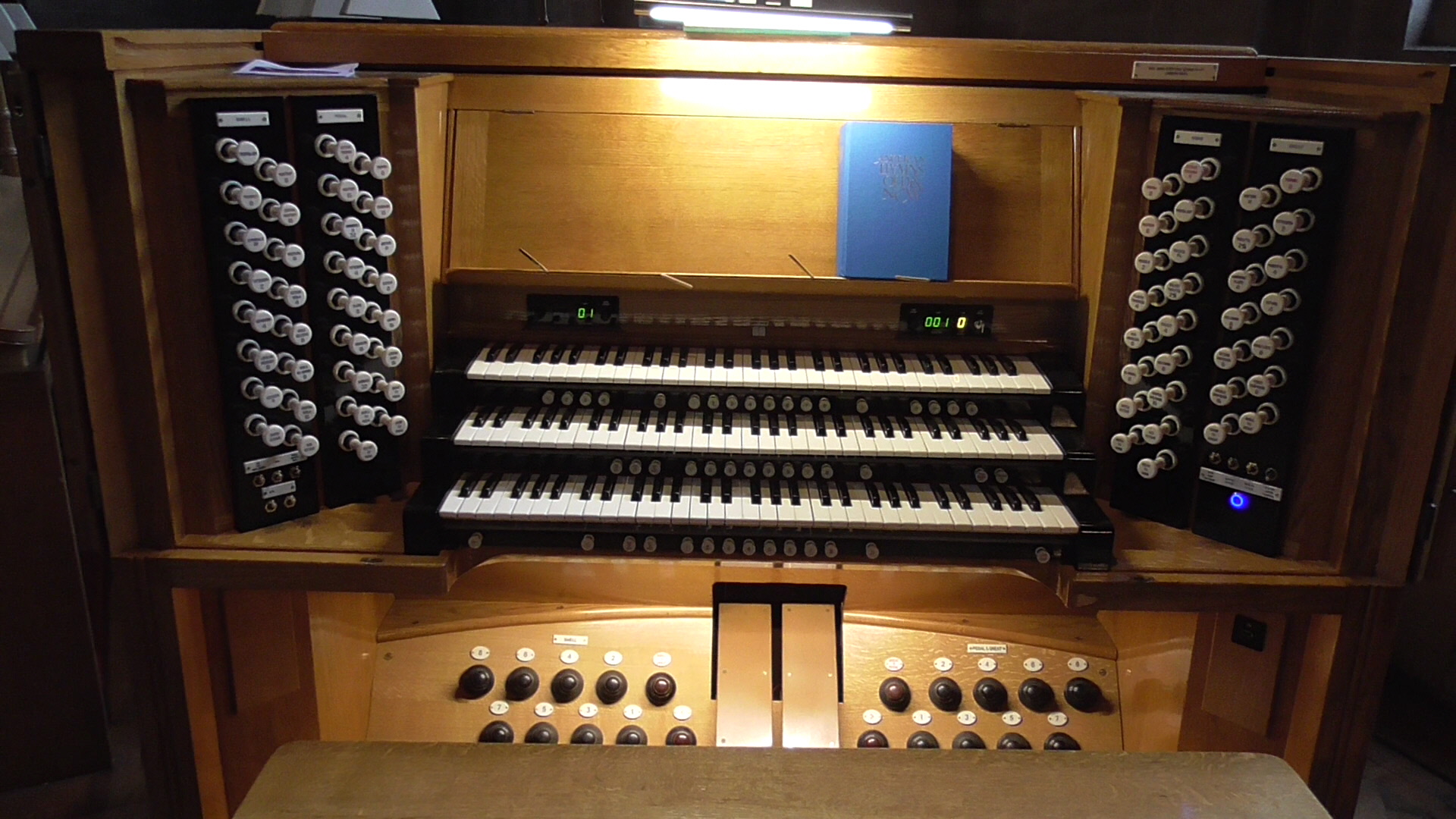
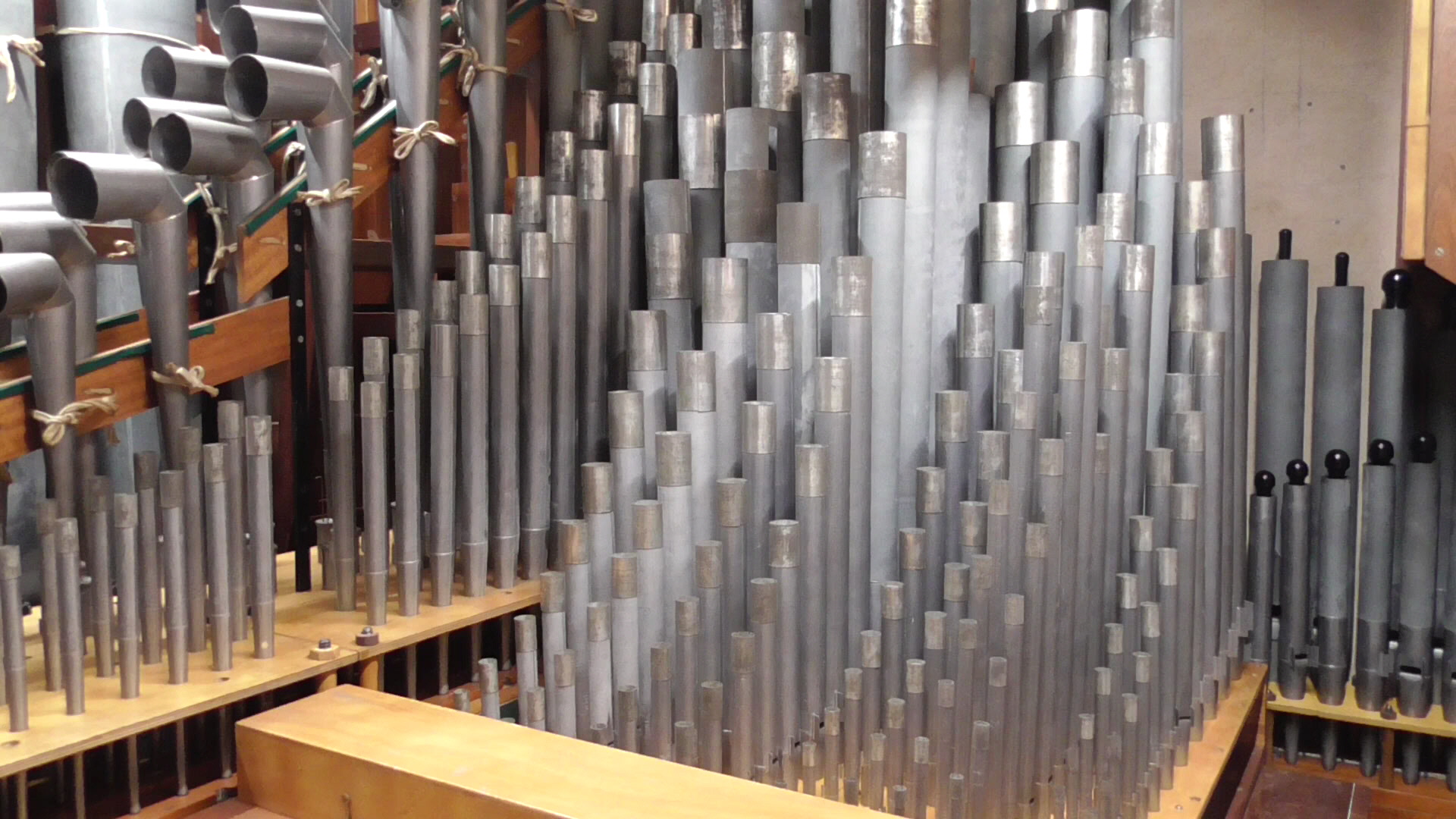
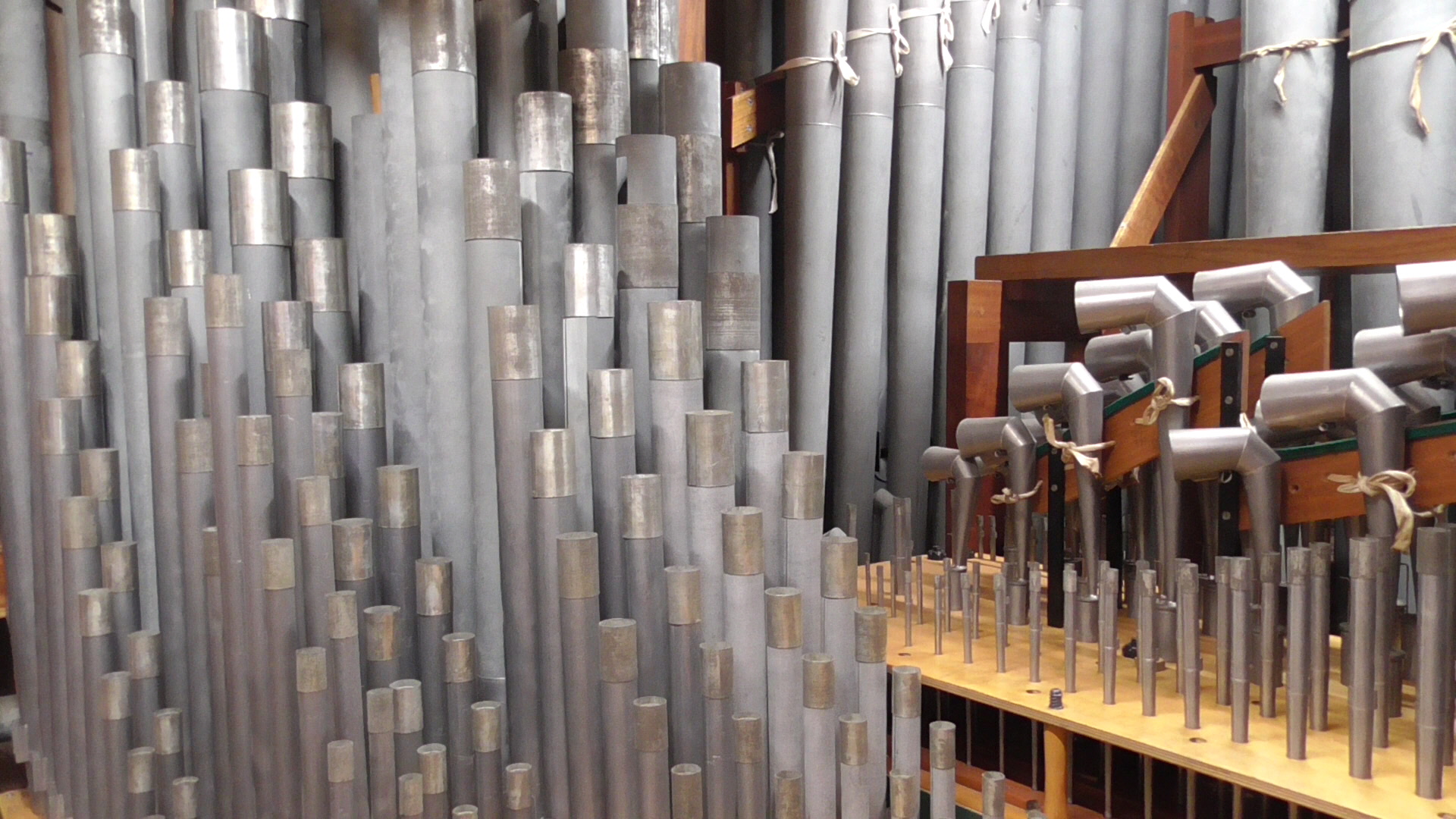
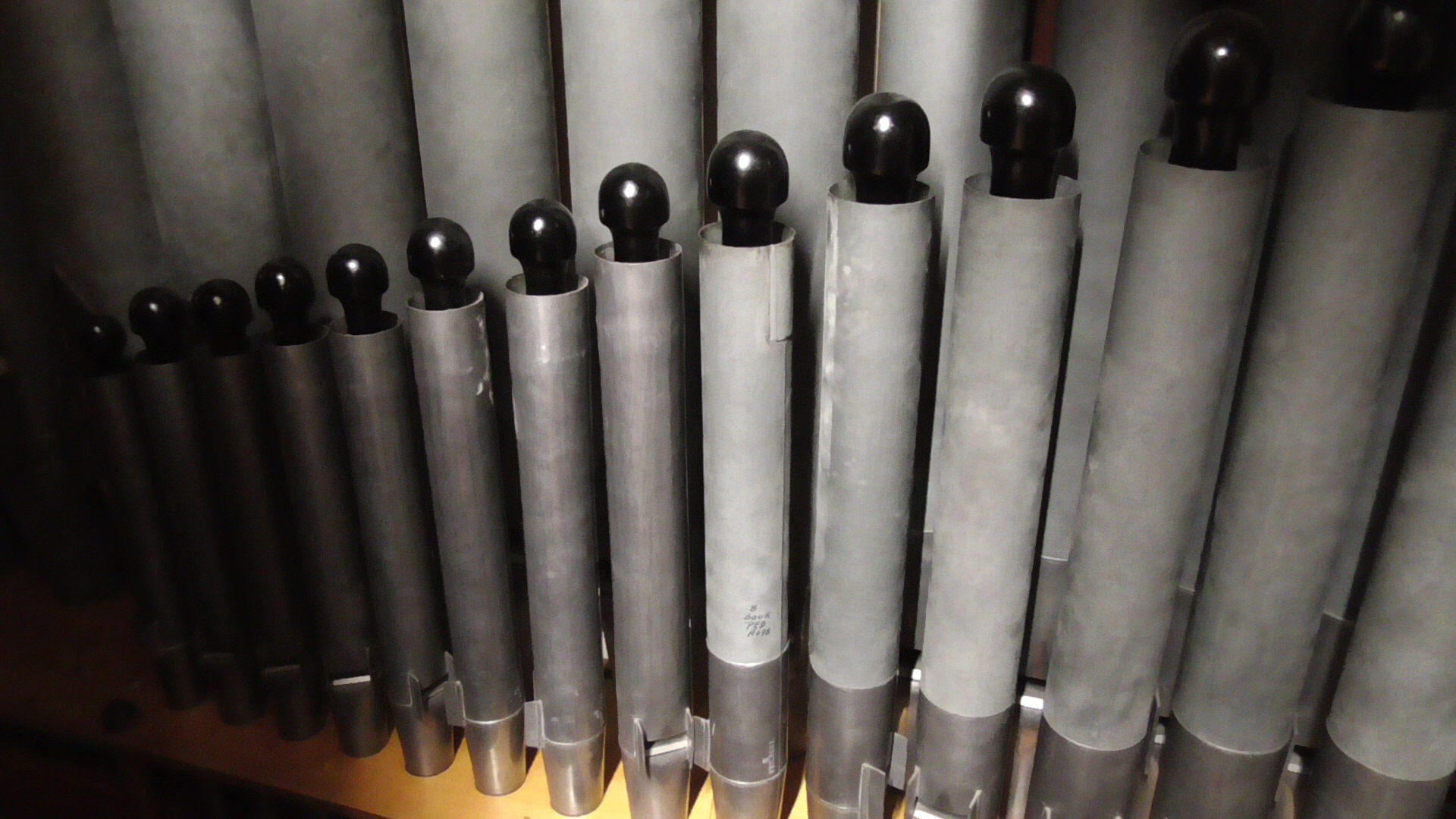
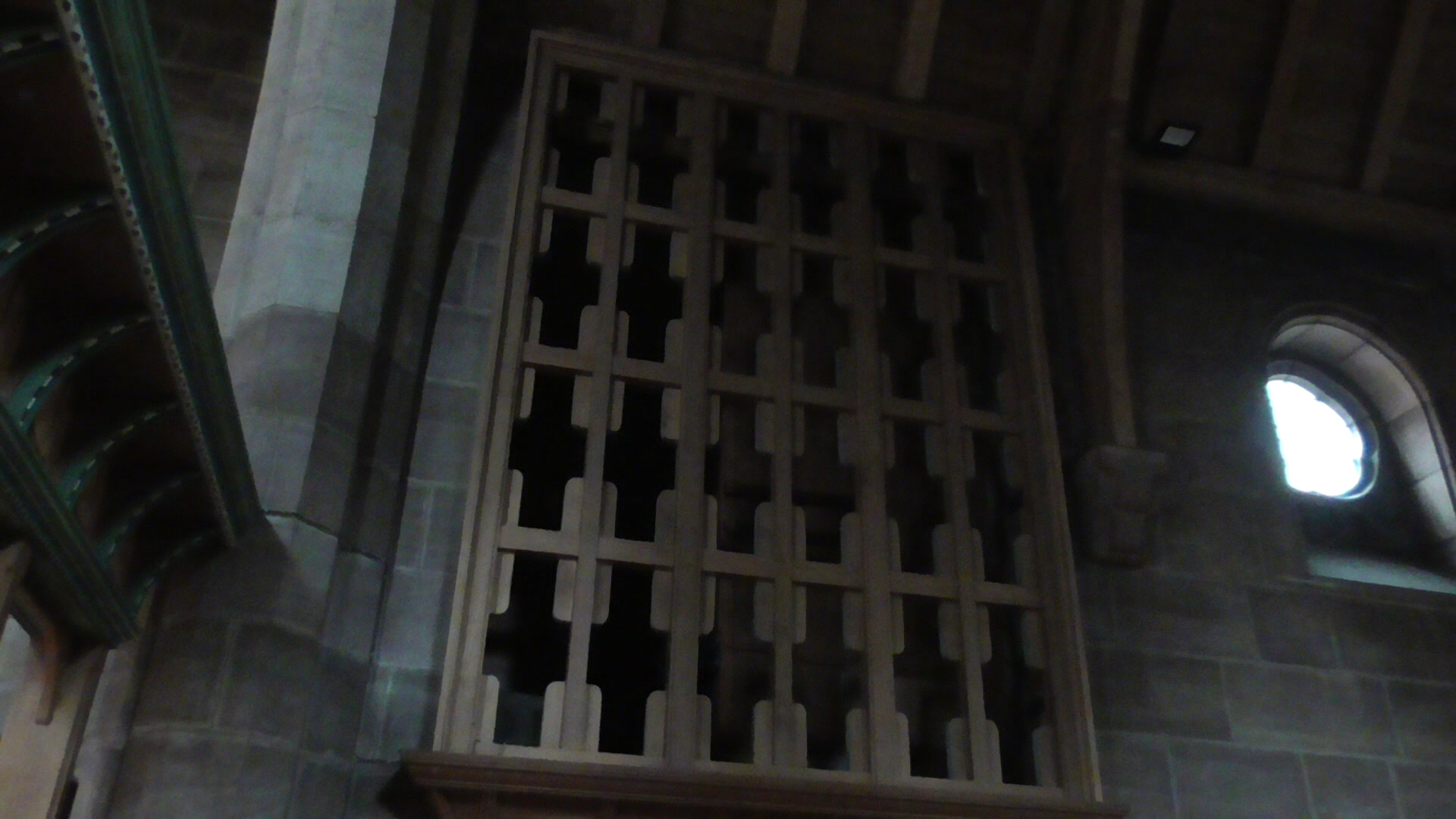
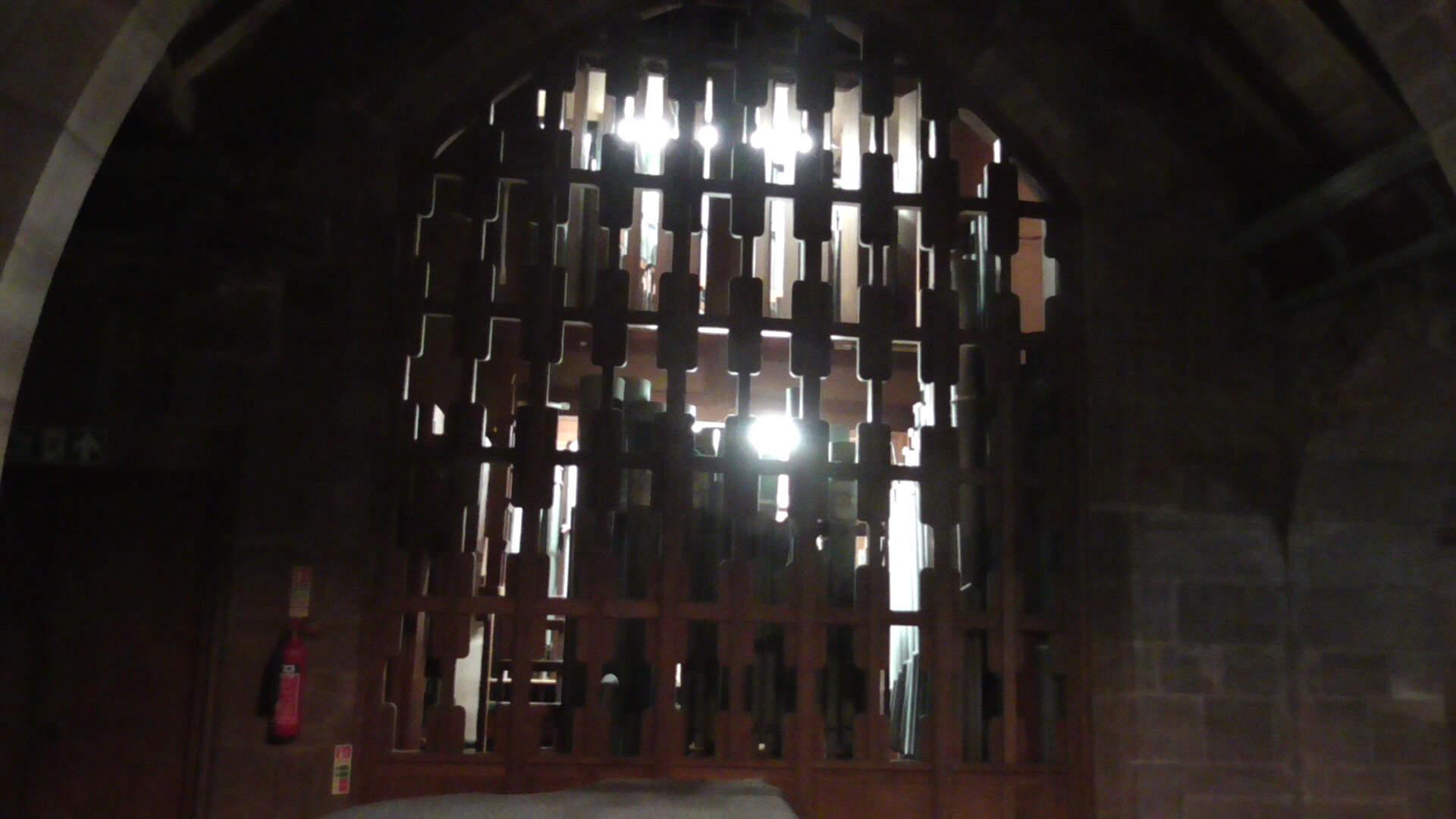
The organ is unusual for Compton in that rather than being built entirely on the 'extension' (or unit) method, each manual division has 6 straight ranks and one extension rank. The patent 32ft polyphonic bass uses 3-note polyphonic pipes which were also not standard. The pipework is housed in the north chancel chamber and speaks into the church via an ornamental grille. The detached console is situated on the opposite side and still retains the original Compton flathead drawstops.
In 2024 the organ was restored by Michael Farley of Colaton Raleigh near Sidmouth, Devon. This included making the chamber weatherproof, cleaning of the pipes and refurbishment of the console and actions. The dedication of the restored organ took place on Sunday 22nd June 2025 which was followed by a recital in the afternoon by Ian Tracey of Liverpool Cathedral.
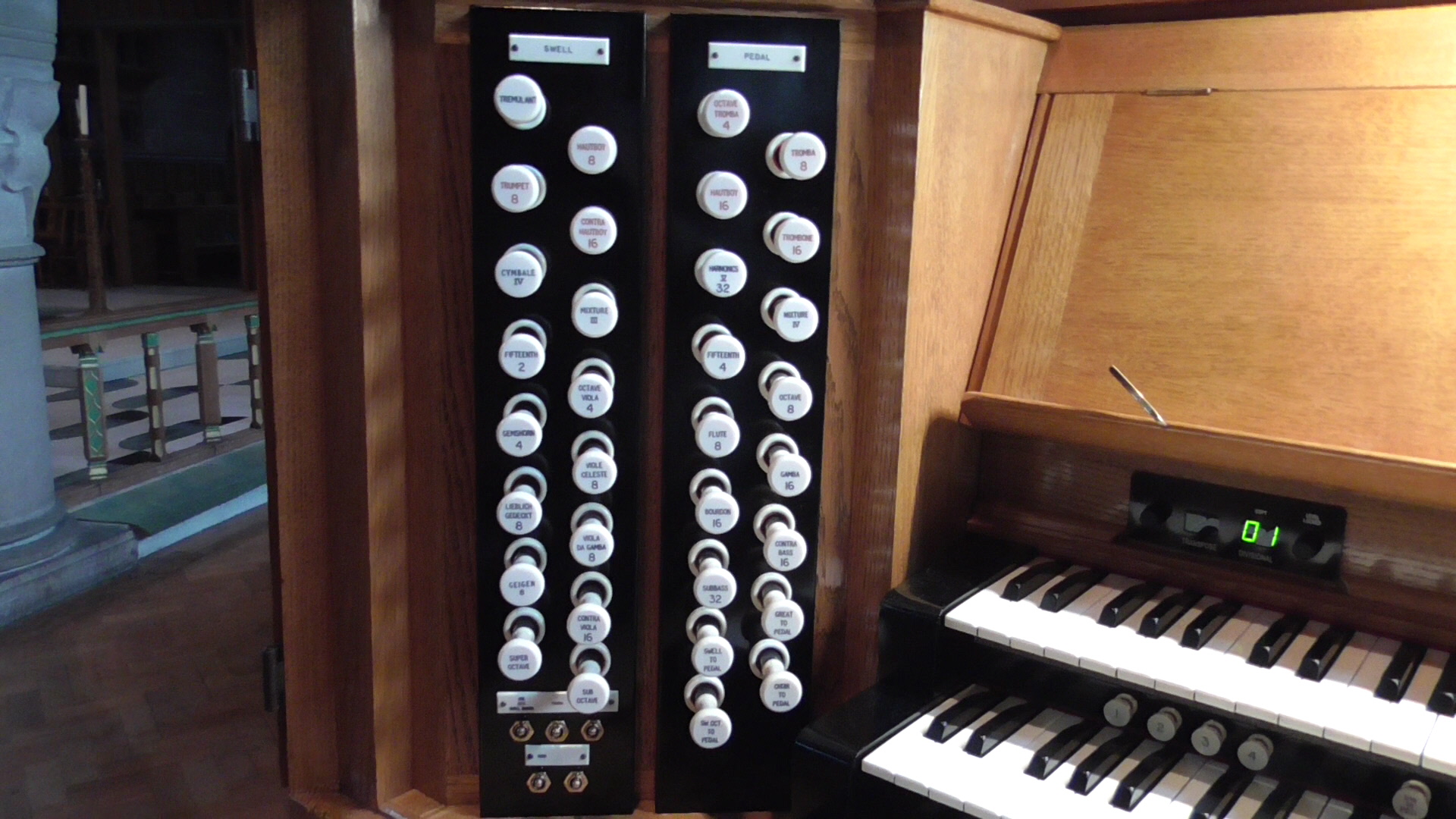
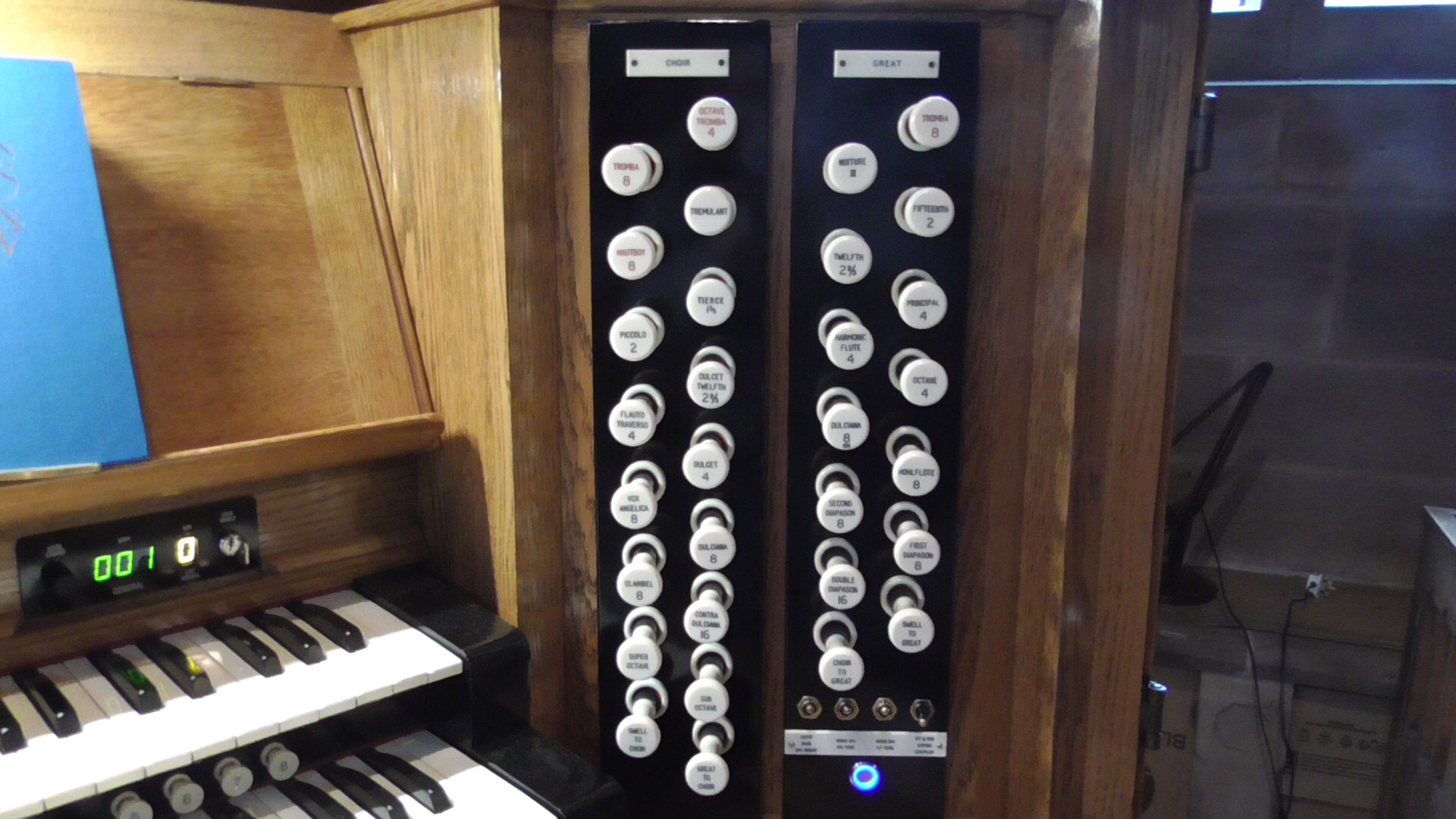
The specification reads:
PEDAL
Sub Bass 32'
Contra Bass 16'
Bourdon 16'
Gamba 16'
Octave 8'
Flute 8'
Fifteenth 4'
Mixture III *
Harmonics IV *
Trombone 16'
Hautboy 16'
Tromba 8'
Clarion 4'
Choir to Pedal
Great to Pedal
Swell to Pedal
Swell Octave to Pedal
CHOIR
Contra Dulciana 16'
Claribel 8'
Dulciana 8'
Vox Angelica 8'
Flauto Traverso 4'
Dulcet 4'
Dulcet Twelfth 2.2/3'
Piccolo 2'
Tierce 1.3/5'
Tromba 8'
Hautboy 8'
Octave Tromba 4'
Sub Octave
Octave
Tremulant
Great to Choir
Swell to Choir
GREAT
Double Open Diapason 16'
First Diapason 8'
Second Diapason 8'
Hohlflote 8'
Dulciana 8'
Octave 4'
Principal 4'
Harmonic Flute 4'
Twelfth 2.2/3'
Fifteenth 2'
Mixture III *
Tromba 8'
Choir to Great
Swell to Great
SWELL
Contra Viola 16'
Geigen Diapason 8'
Lieblich Gedeckt 8'
Viola da Gamba 8'
Viole Celeste 8'
Gemshorn 4'
Octave Viola 4'
Fifteenth 2'
Mixture III *
Cymbale III
Contra Hautboy 16'
Trumpet 8'
Hautboy 8'
Sub Octave
Octave
Tremulant
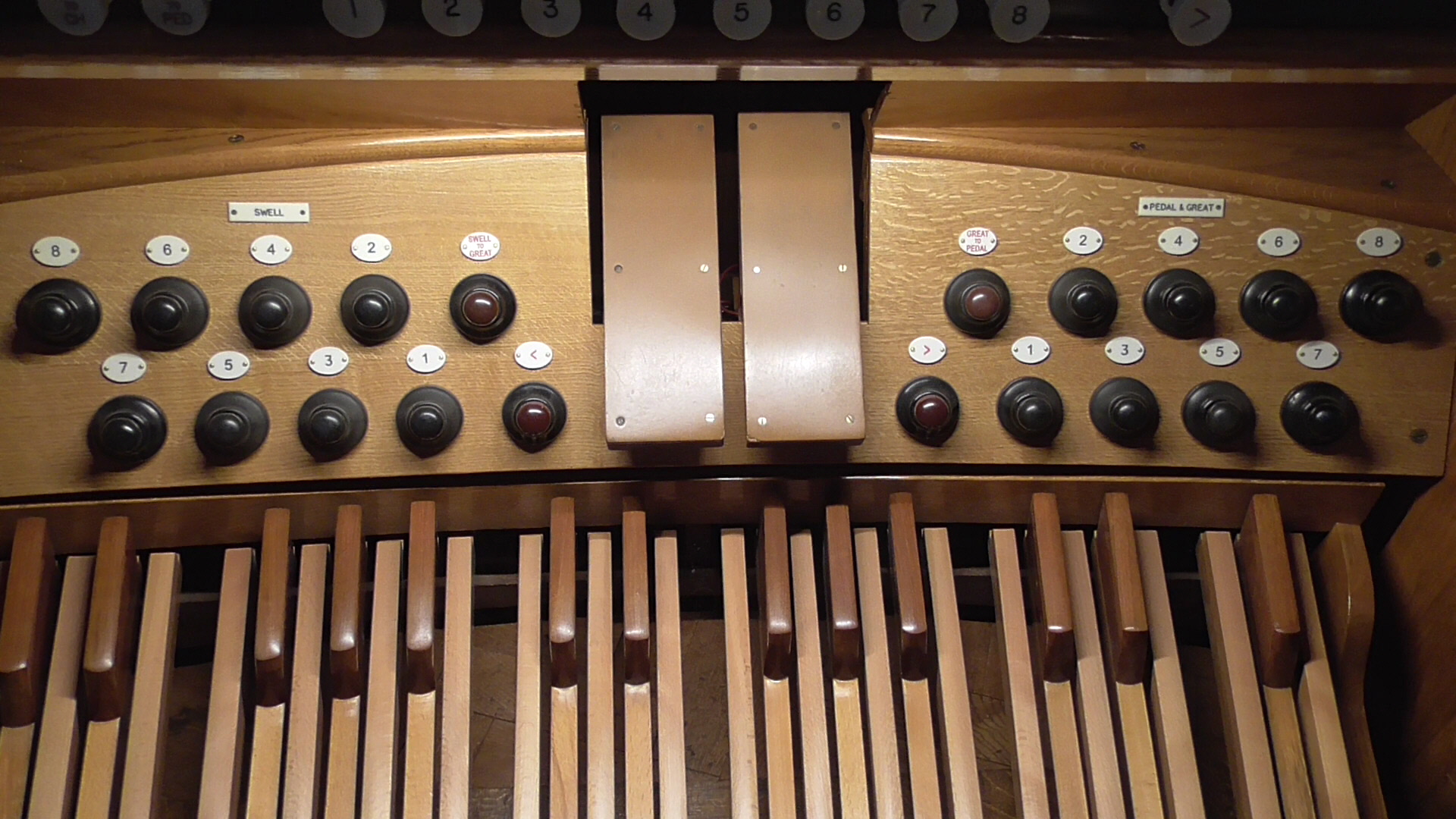
ACCESSORIES
8 double touch thumb pistons to Choir and Pedal
8 double touch thumb pistons to Great and Pedal
8 double touch thumb pistons to Swell and Pedal
8 toe pistons to Pedal and Great
8 toe pistons to Swell and Great
8 general thumb pistons *
6 reversible thumb pistons
2 reversible toe pistons
1 setter thumb piston
1 general cancel thumb piston
1 balanced expression pedal - swell
1 balanced expression pedal - choir
6 ventil switches
* denotes new additions in 2025